
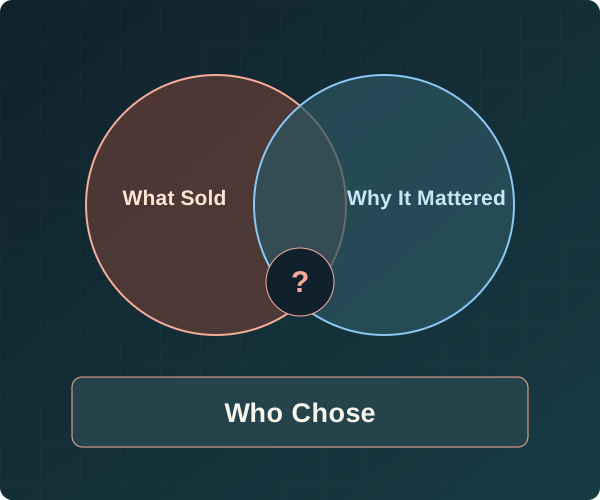
Amazon will tell you what sold, to which postcode, at what price, after which advertising click. It will not tell you why. That gap is where most catalog decisions go wrong, because a brand with rich behavioural data assumes it has customer understanding, and those are different things.
What the Data Genuinely Knows
Search terms, conversion rates, repeat purchase, basket composition, price sensitivity, seasonality. This is real and it is more than most channels give you. It describes what happened with unusual precision.
What It Structurally Cannot Know
- Who bought it. Amazon does not hand you the customer. You have transactions, not people.
- What they were replacing. Every purchase is a switch from something, and the something is invisible.
- What they nearly bought instead. The consideration set is the most useful thing in positioning and it is entirely absent.
- Why they chose you. Price, image, review count, availability, familiarity, or the fact that you were the only one in stock on a Tuesday.
- Who did not buy, and why. The largest group, and completely dark.
Behavioural data tells you what happened. It never tells you what would have happened if you had been something else.
Why This Costs Real Money
Three decisions depend entirely on the answers the data cannot give:
- What to make next. Sales history tells you what sells now. It cannot tell you what an unserved buyer wants, because they are not in your data by definition.
- What to say. Copy written from search terms describes the product in the words people already use to find things like it. That is fine for being found and useless for being chosen over a competitor saying the same words.
- What to charge. Price sensitivity in the data reflects the buyers you attracted at the prices you set. It says nothing about a segment that would pay more for something you are not currently offering.
Where the Missing Half Actually Lives
None of this requires expensive research. The evidence exists and is mostly ignored:
- Your reviews, read for reasons rather than sentiment. Not the star rating. The sentences describing what the buyer was doing, what they had before, and what finally decided them. Read fifty of your own and fifty of the competitor you lose to.
- Returns by reason code. The most honest feedback you have, because the customer paid to give it.
- Questions on the listing. Every question is a gap in the listing and a clue about what the buyer is worried about.
- Your own support inbox and anything sold direct. Where you do have the customer, you have the half Amazon withholds.
Takeaway
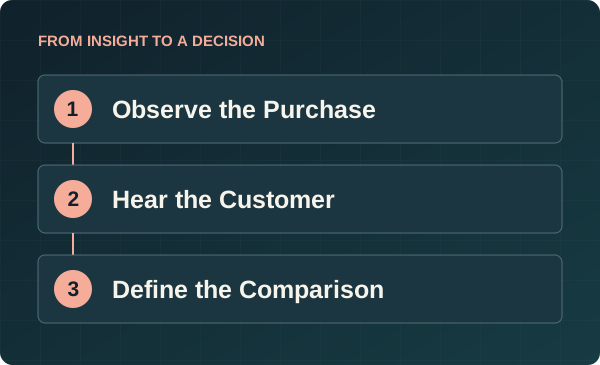
Read one hundred reviews this month, half of them a competitor's, and write down only two things per review: what the buyer was replacing, and what decided them. That is the consideration set and the decision axis, the two facts Amazon will never give you, and they change what you build and how you price it.
The brands that pull ahead in a category are rarely the ones with better dashboards. They are the ones who know which two things a buyer is actually choosing between, and have built the product and the listing to win that specific comparison.